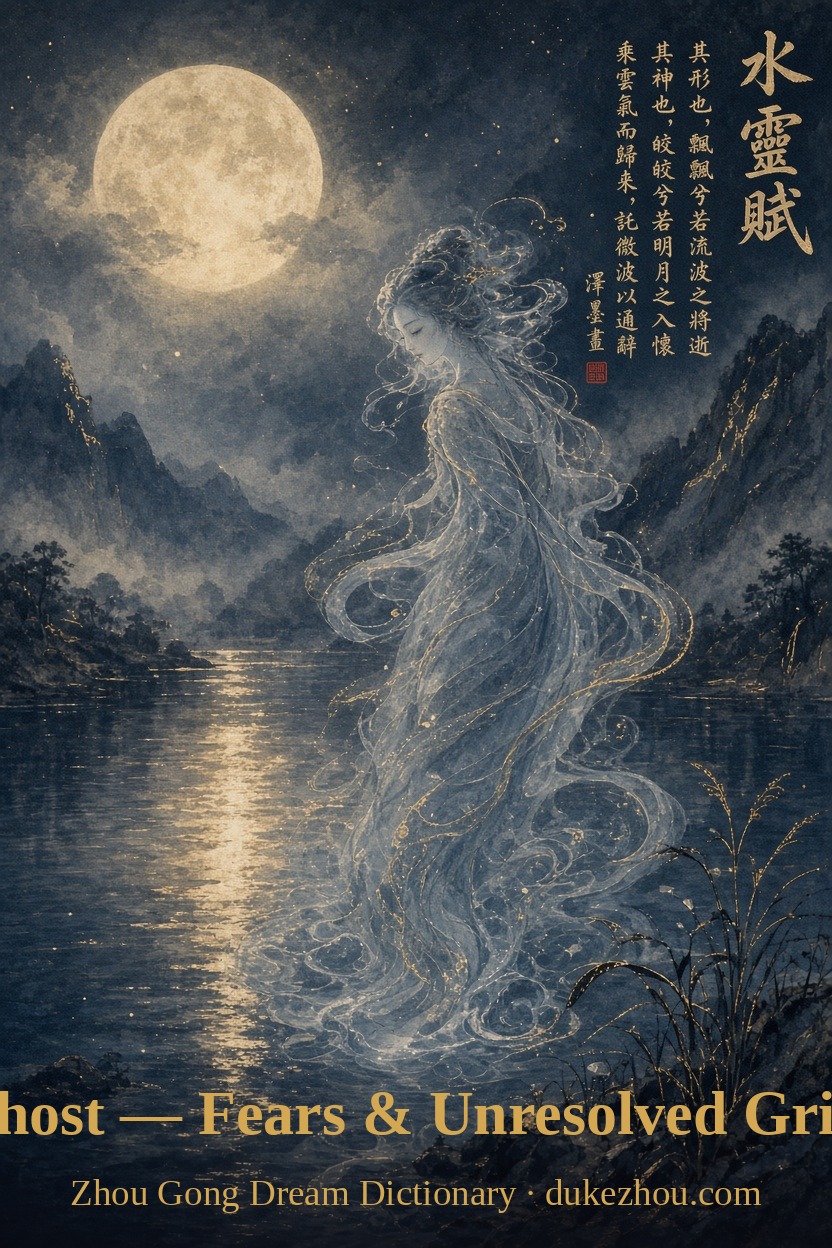
ghost Dream Meaning
Zhou Gong Dream Interpretation — people symbol
📜 Traditional Meaning in Zhou Gong Jie Meng
📖 Zhou Gong Jie Meng — Original Text (周公解梦原典)
The classical entries below are drawn from the Buddha–Taoist–Monk–Ghost (佛道僧尼鬼神) chapter of the Zhou Gong Jie Meng text. Each line is a traditional one-line verdict; the modern gloss explains how the original phrase reads today.
- 犬吠人鬼来求食A dog barking at a person — a ghost comes seeking food.The dog's bark at an unseen presence reads as a spirit asking for offerings.
Source note: Quoted from the Buddha–Taoist–Monk–Ghost (佛道僧尼鬼神) chapter of the Zhou Gong Jie Meng traditional text (通行本). Modern glosses are our plain-language readings of the classical one-line verdicts; the classical text is public domain and quoted as-is.
🌙 Specific Dream Scenarios — ghost
1. Seeing a ghost in a dream
Seeing a ghost without interaction suggests external influences or worries. Zhou Gong says it may indicate someone is plotting against you or that you are overly anxious.
💡 This dream often reflects stress or a sense of being watched in your waking life.
2. Talking to a ghost
Conversing with a ghost can mean receiving a message from the spirit world. Zhou Gong interprets it as a warning or advice from an ancestor.
💡 It may represent your inner voice or subconscious trying to communicate something important.
3. A ghost chasing you
Being chased by a ghost signifies running from your fears or unresolved guilt. Zhou Gong warns of impending trouble if you do not confront the issue.
💡 This dream often indicates avoidance of a problem that needs your attention.
4. A ghost in water
A ghost in water relates to the water element, indicating emotional distress or hidden dangers. Zhou Gong suggests caution in financial or romantic matters.
💡 It may reflect deep-seated emotions or a situation that feels overwhelming.
5. A ghost in your house
A ghost in the home suggests domestic discord or ancestral spirits. Zhou Gong says it may indicate family secrets or a need to honor ancestors.
💡 This dream could point to unresolved family issues or a need for harmony at home.
6. A friendly ghost
A friendly ghost is often a benevolent ancestor offering guidance. Zhou Gong considers it auspicious, especially if the ghost smiles or gives a gift.
💡 It may represent a comforting memory or a positive influence from your past.
📊 When Is This Dream Lucky or Unlucky?
🟢 When Auspicious
- Ghost is smiling or peaceful
- Ghost gives you something
- Ghost is a known ancestor
- Ghost disappears without fear
🔴 When Cautionary
- Ghost chases you
- Ghost is angry or threatening
- Ghost in water or dark places
- Ghost speaks of death or illness
🏮 Cultural Context
🌊 💧 Wu Xing (Five Elements) Reading
🌏 Chinese vs. Western Interpretation
🧘 What To Do After This Dream
💎 Recommended: Ghost-repelling talisman bracelet
A traditional Chinese bracelet with ghost-repelling symbols, often used to calm restless dreams and protect against negative spirits.
→ Check price on Amazon❓ Frequently Asked Questions
Is dreaming of a ghost always bad?
No. In Zhou Gong tradition, a friendly ghost or an ancestor can be auspicious, offering guidance or protection.
What does it mean if I see a ghost in water?
It suggests emotional turmoil or hidden dangers. Zhou Gong advises caution in financial and romantic matters.
Should I be worried if a ghost chases me?
It indicates you are avoiding a problem. Confront the issue in waking life to resolve the fear.
📚 Sources & Tradition
- Dunhuang manuscripts on dream interpretation
- Menglin Xuanjie (Secrets of Dream Interpretation)
- Duanmeng Mishu (Secret Book of Dream Interpretation)
- Popular editions of Zhou Gong's Dream Dictionary